More Money Won’t Fix What You Don’t Know
You can earn more. Why not? But earning it is only half the story. Knowing what to do with it is the other half. This book is about that half. So you can make better decisions with it.
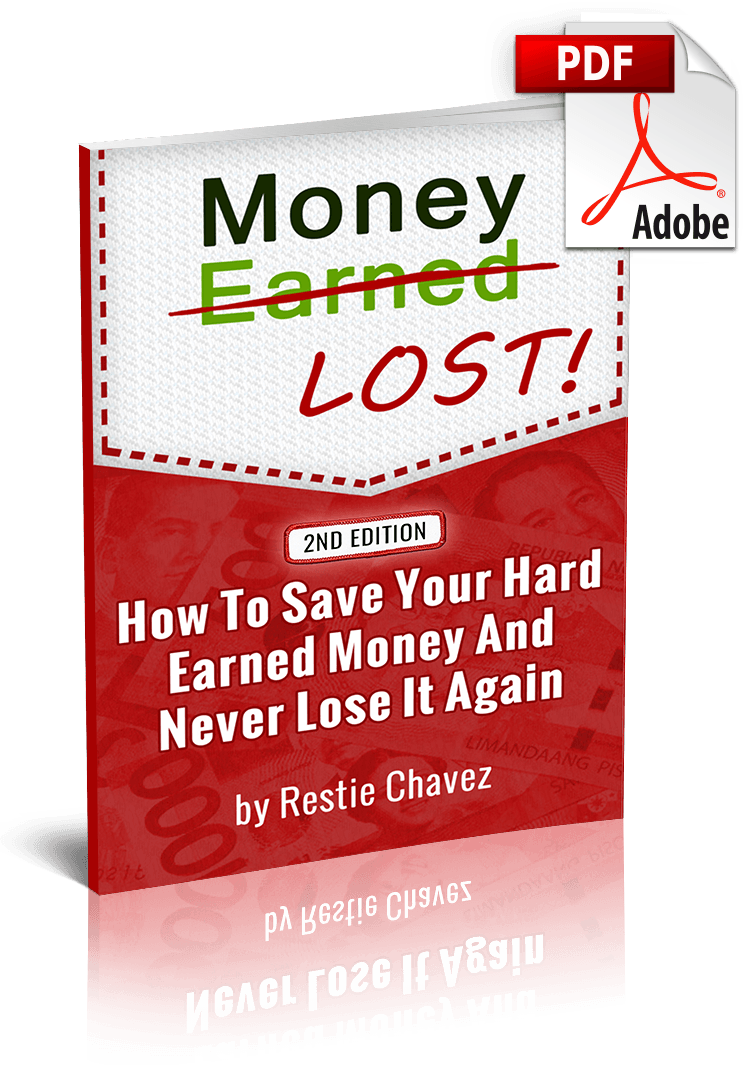
Most people are taught how to earn money. Pero iilan lang ang nakaka alam how to grow what they already have—without asking for more money yet.
And that's where things can quietly start going wrong.
Hindi Pera ang Problema. Not Understanding It Is.
Money is a good follower. Bigyan mo ng direction, and it can go further. Ang tanong: are you directing your money, or ikaw yung follower? If it's the latter, that's the problem right there.
Earn
You may find ways to earn in places you weren't trained to see. Earning doesn't always look like a job.
Tithe
Tithing is not buying blessings. It's recognizing that not everything you receive is yours to keep. It's obedience, not a transaction.
Give
Giving isn't money disappearing. It's part of the cycle that keeps money moving from one place to another.
Spend
Spend without fear, guilt, or regret. You deserve to live fully—without taking from money meant for other purposes.
Enjoy
Money isn't meant to be accumulated forever. Learn to enjoy what it can do while you're still here.
Put It To Work
The bonus section introduces investing, leverage, due diligence, risk, and serious decision-making.
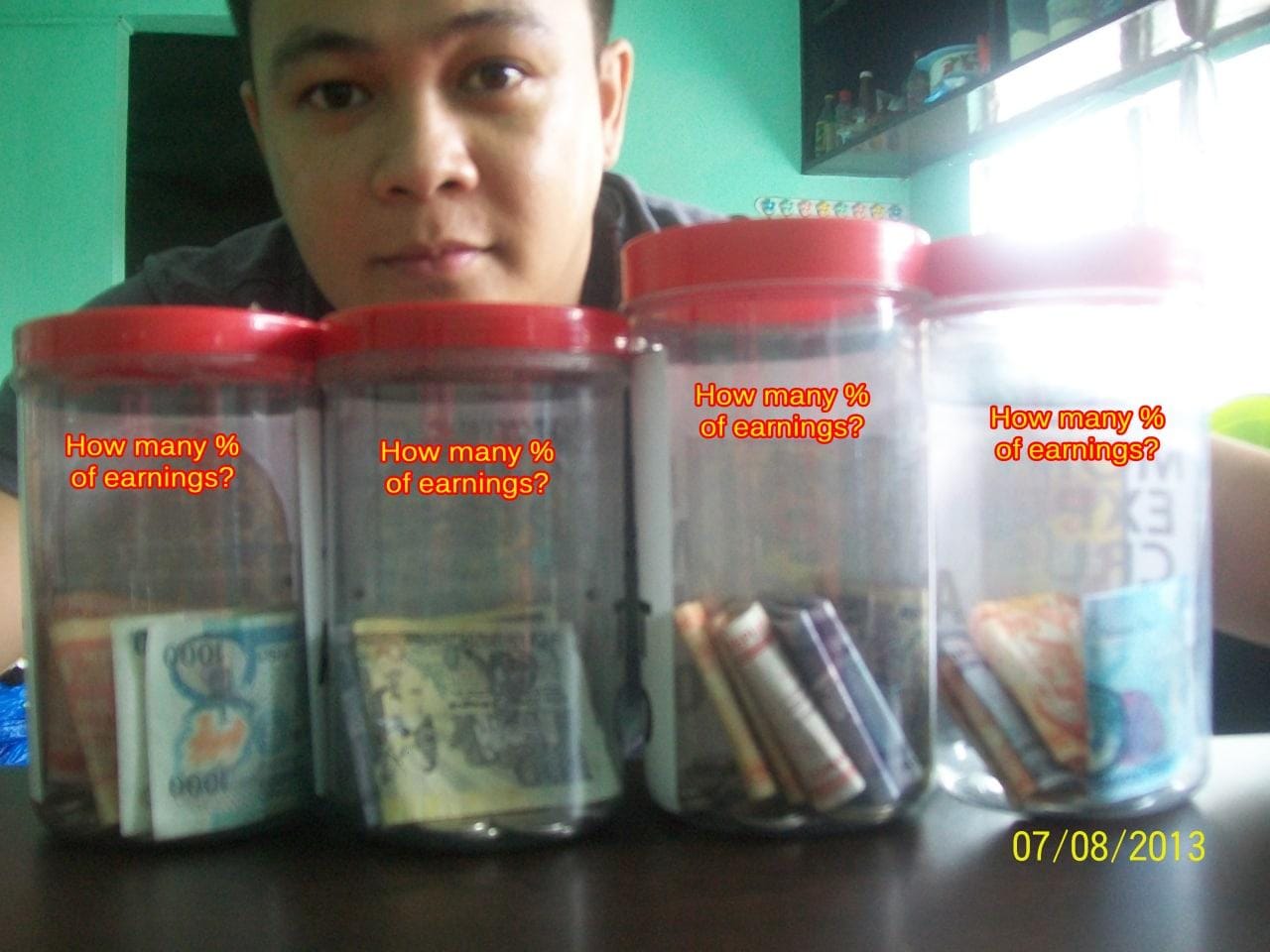
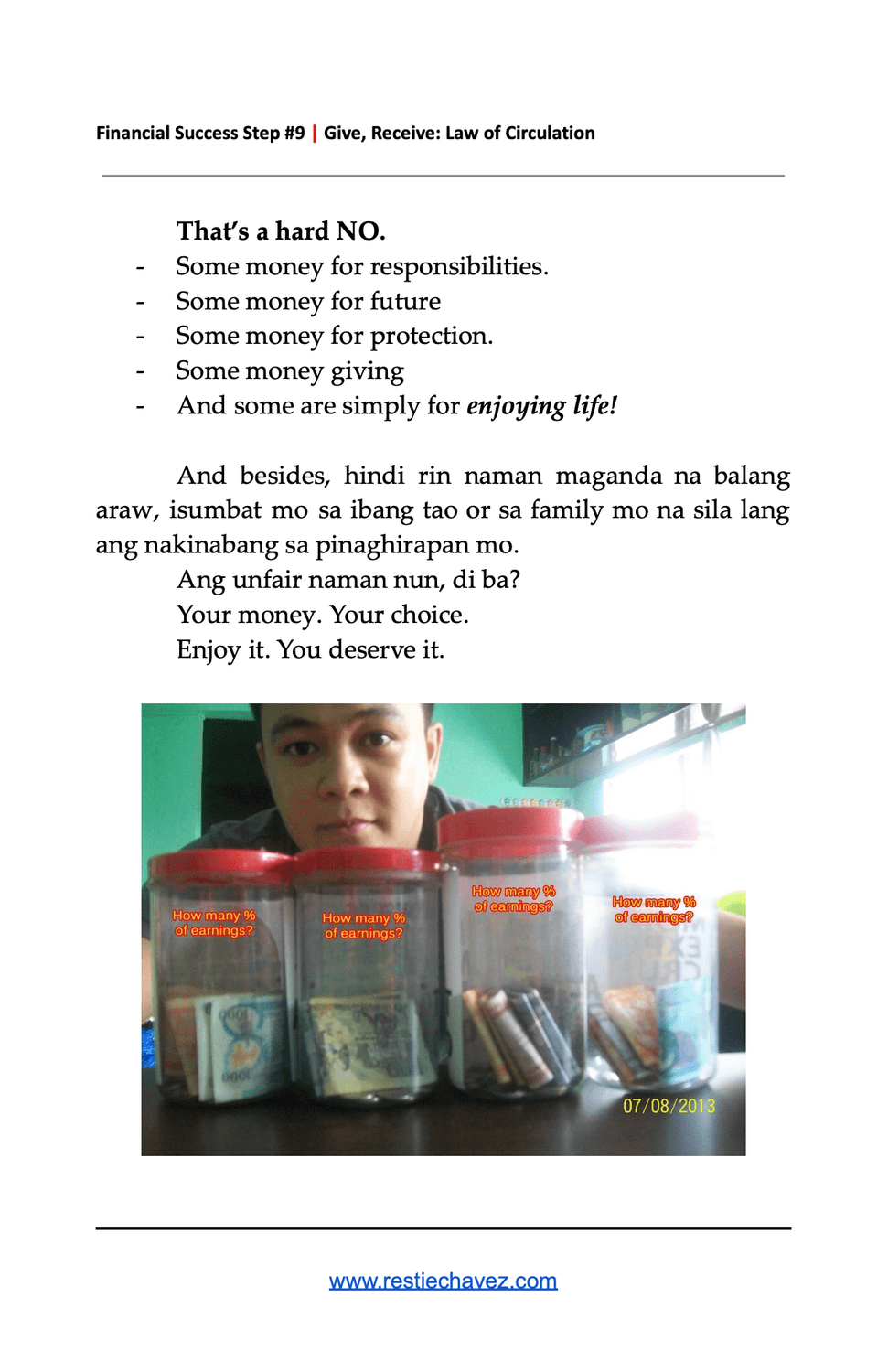
Four jars. Four decisions about your money.
One of the most personal ideas in the book is represented by four simple jars. Simple lang ang gusto iparating ng concept na 'to: money needs direction.
There's More to Money Than I Thought.
It's a collection of discoveries, observations, and ideas I've gathered while dealing with money, making mistakes, and figuring things out along the way.
Start with what drives you
Find the reason behind your financial goals, stay open to what you still have to learn, and turn difficult experiences into lessons and an edge.
Change how your money grows
Pay yourself first, discover ways to make money beyond your time, and stay hungry enough to keep learning.
See money and yourself differently
Your environment shapes what you see. Start small, keep your vision big, and understand how money moves through giving, receiving, and enjoyment.
Stop waiting. Start.
Because the things you learn only become useful when you finally do something with them.
Start Small. But...
Start small—yes. Pero hindi ibig sabihin ili-limit mo ang vision mo.
Most things don't begin looking like the thing they're eventually going to become.
One product. One location. One small operation.
That's what starting small should look like.
Sometimes, they begin with something small enough to start.
Big Things Start Small.
A small beginning doesn't mean a small future.
The struggles, mistakes, and sacrifices you experience along the way can prepare you for the bigger thing you're trying to build.
Small enough to start. Big enough to matter.
Investing: Put Your Money to Work
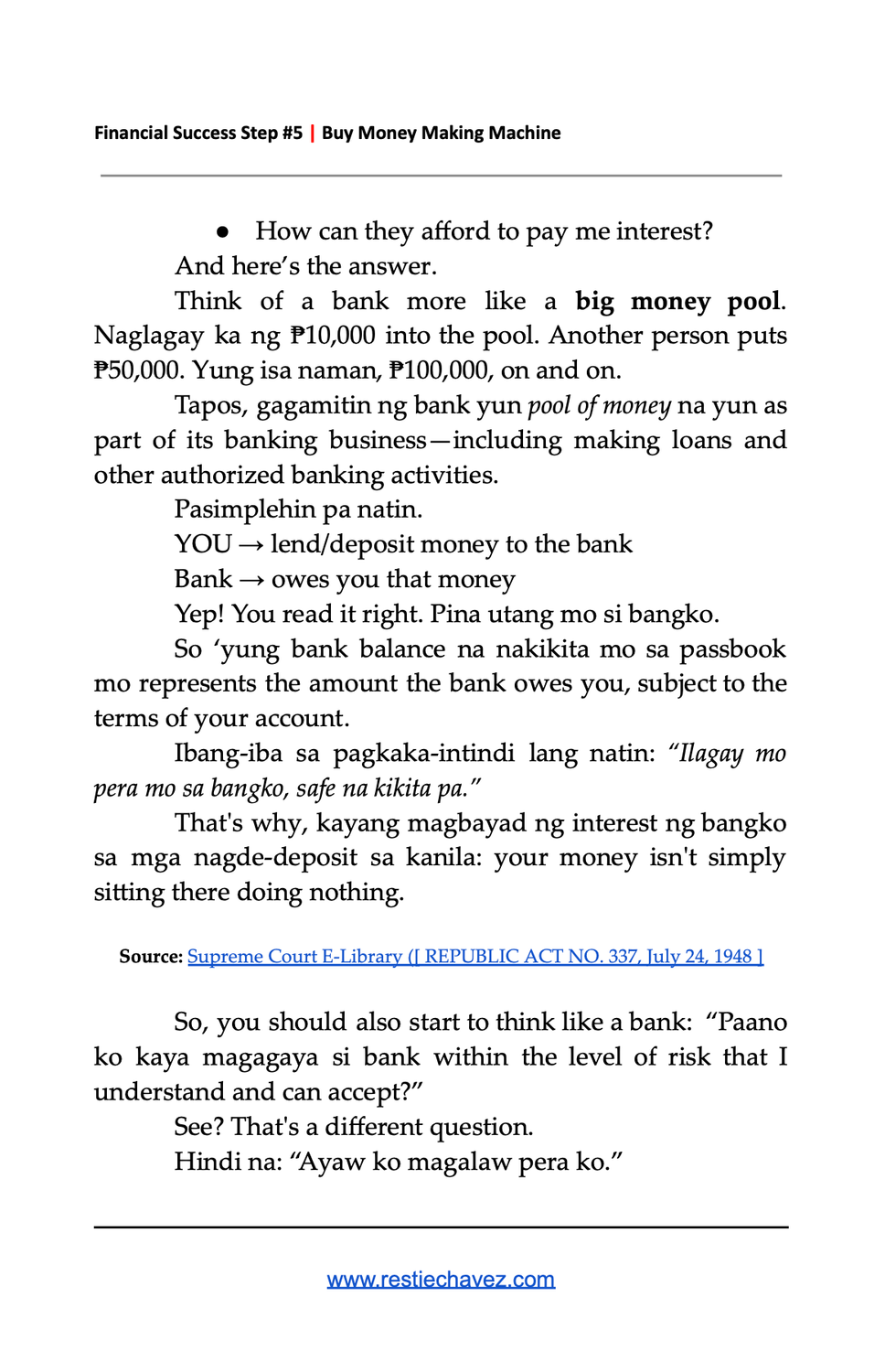
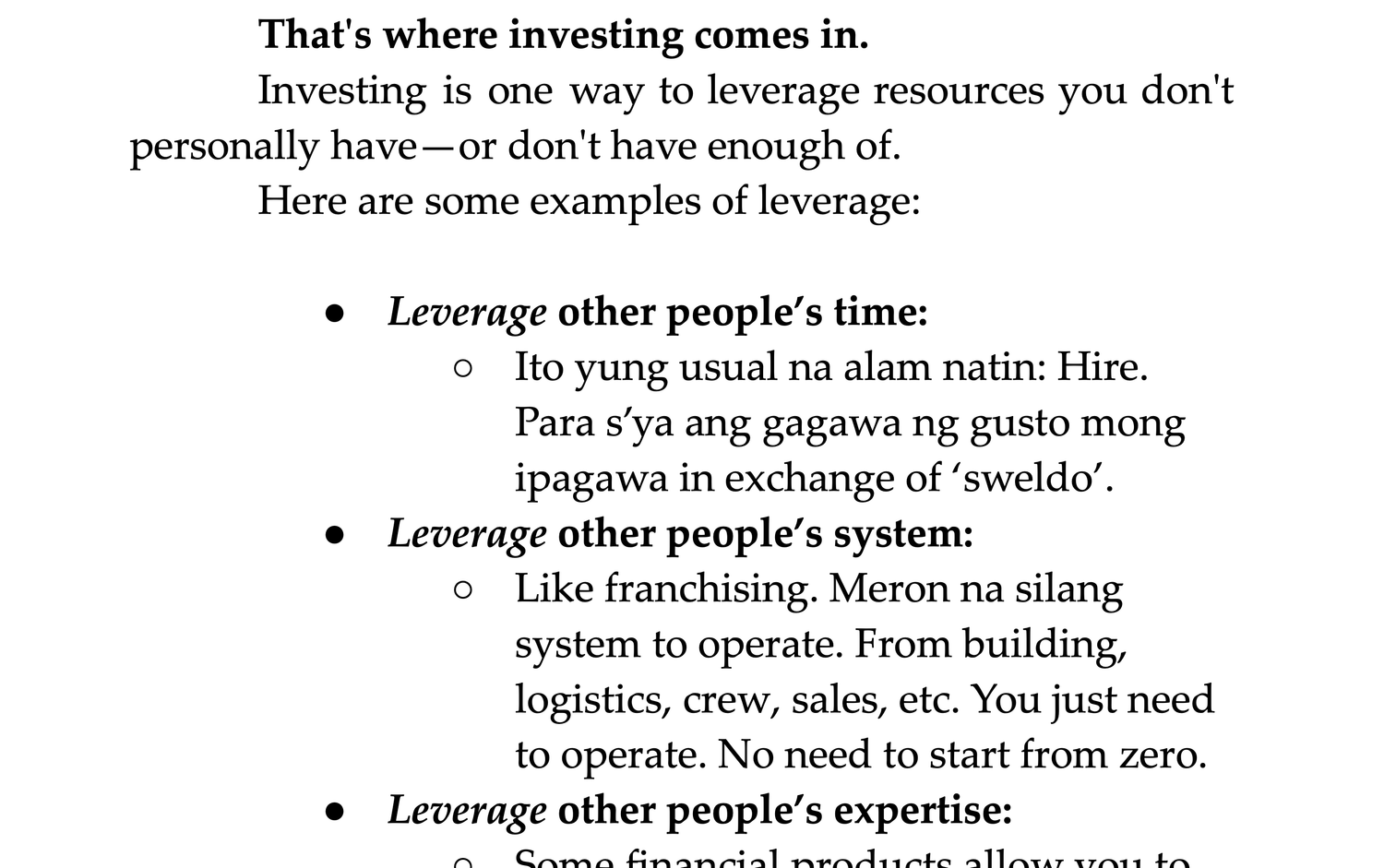
Hindi magic ang Investing. It is one possible way to leverage resources you don't personally have—or don't have enough of.
Leverage other people's time
Hire people to perform work in exchange for compensation.
Leverage other people's systems
Franchising is one example: you can use an existing operating model rather than starting everything from zero.
Leverage other people's expertise
Certain financial products allow you to leverage professional fund managers or financial institutions. Understand what you are actually buying, including fees, risks, and guarantees.
Leverage other people's business
You can buy an ownership interest in an existing company or investment vehicle, such as publicly traded companies or REITs, and potentially benefit from distributions and/or capital appreciation depending on the investment structure and performance.
But investing also carries risk. The goal isn't to eliminate every risk. The goal is to understand the opportunity and make a decision you can actually live with.
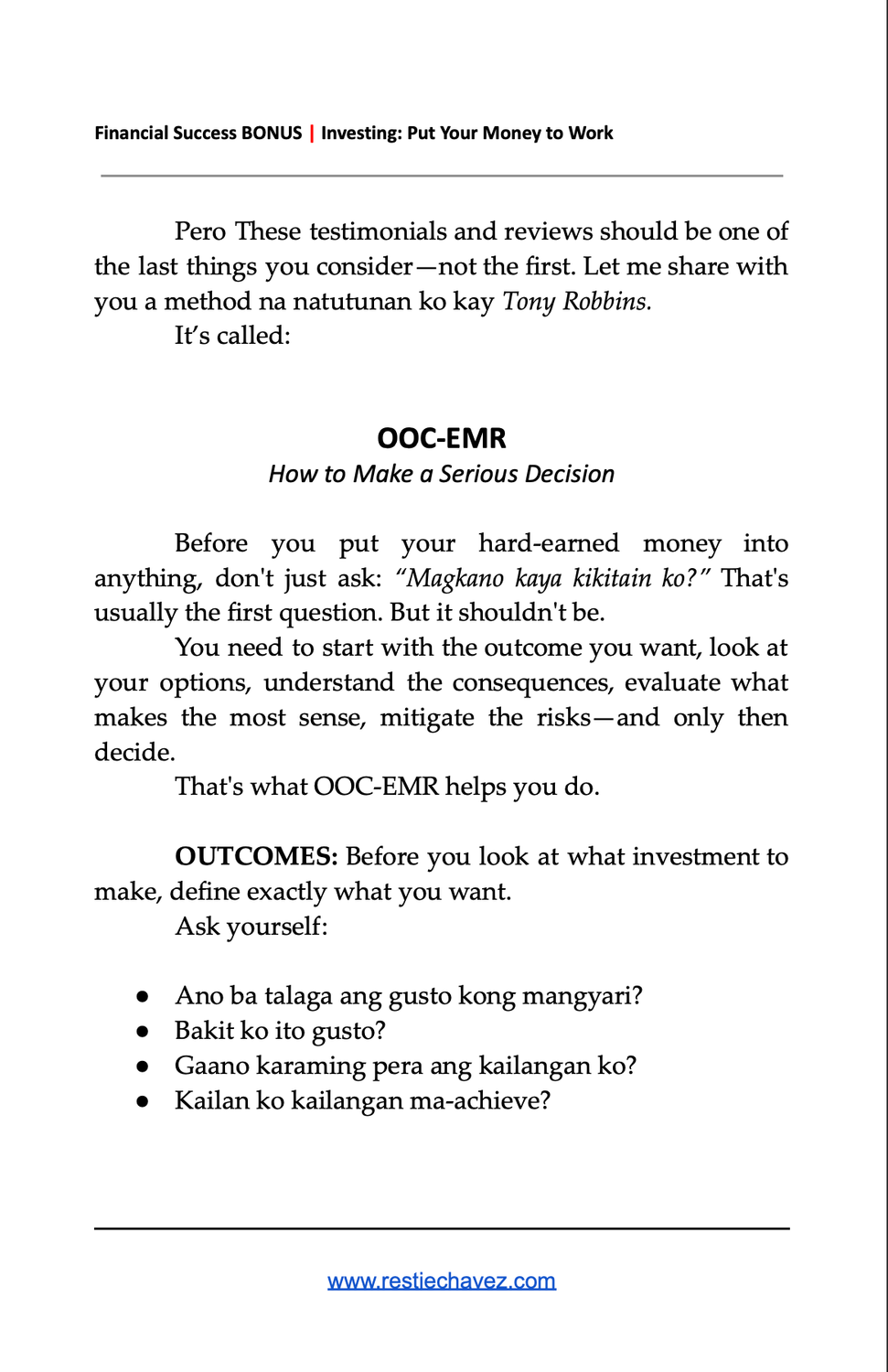
OOC-EMR: How to Make a Serious Decision
Bago ka mag invest ng perang pinaghirapan mo, don't start with only: “Magkano kaya kikitain ko?”
Outcomes
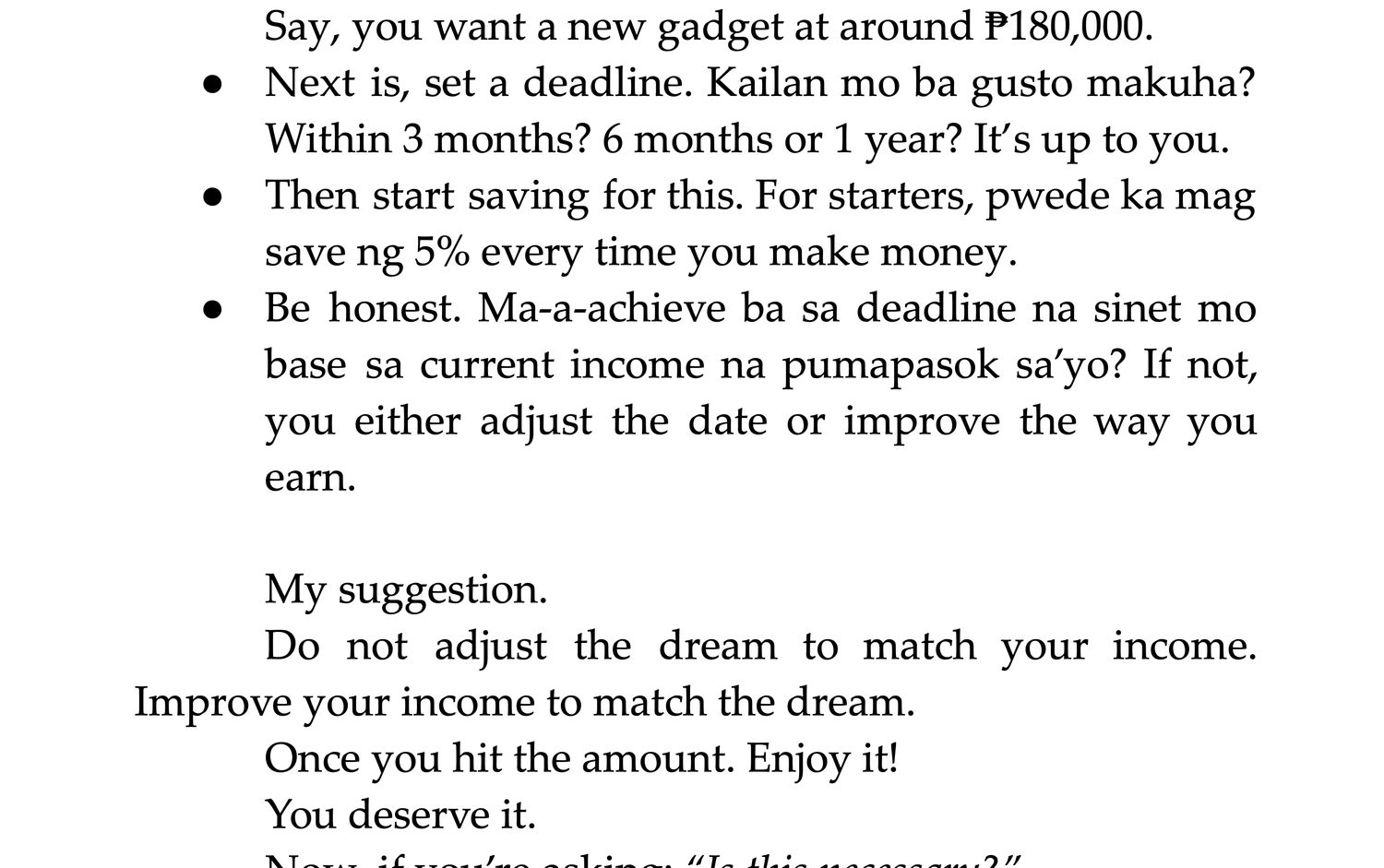
What do you actually want? Why? How much money do you need? When do you need to achieve it?
Options
Find at least three different ways to achieve the same outcome. One option is no choice. Two is a dilemma. Three or more gives you choices.
Consequences
Look at both possible gains and losses. Ask how likely each scenario is and how much impact it could have on your financial life.
Evaluate
Compare potential reward, acceptable risk, and fit with your goal. The highest potential return isn't automatically the best choice.
Mitigate
Reduce the damage if things go wrong: diversify where appropriate, understand fees, verify registration or regulation when applicable, and don't risk money you cannot afford to lose.
Resolve
Once you've done your homework, choose the option that best serves your outcome and execute. Due diligence is good. Paralysis is not.
Before You Decide, Look Inside.
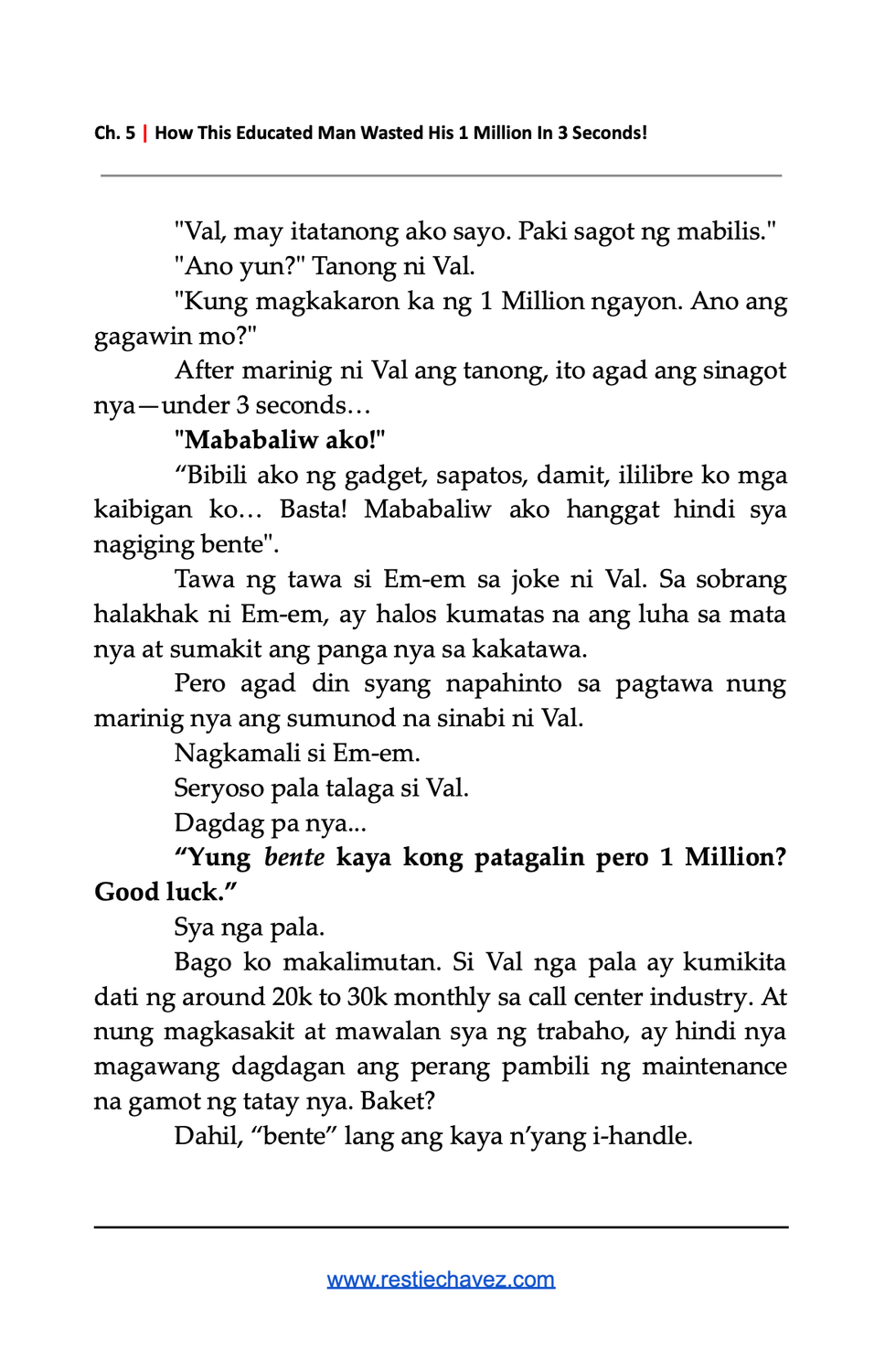
Don't believe me. Don't believe sa sinasabi ng iba. See for yourself.
Restie Made the Mistakes. You Get the Lessons.
Restie Chavez is a published Filipino author, entrepreneur and a financial literacy advocate.
Before entrepreneurship, Restie was already earning a decent income from his regular job—and sometimes making five to six figures from a single transaction. Yet there were moments when he would look back and ask himself, “Nasan na ’yun?”
That question made him look closer at the decisions he had been making with his money.
In mid-2012, he transitioned into entrepreneurship not because he had everything figured out, but because he wanted answers.
The insights in this book are a result of that search.

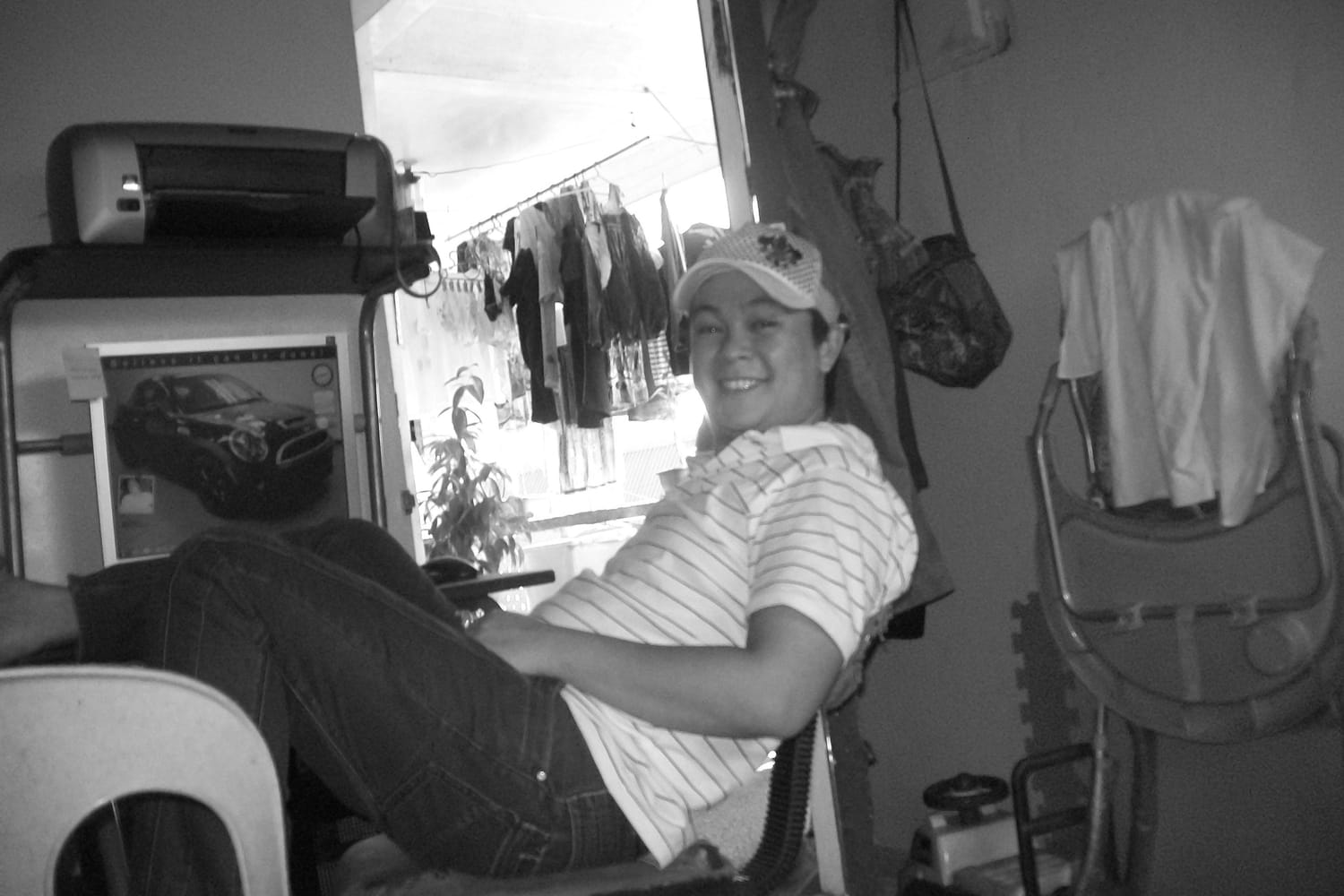
He didn't start with all the answers.
That's part of the point.
This ebook, Money Lost! (2nd Edition) is his way of giving back—the same ideas that helped him see money more clearly, make better decisions, and build a more intentional path forward.
If these ideas help you avoid even one silent financial mistake, then the book has served its purpose.
Restie isn't saying, “Trust me. This will work.”
He only wants to privately share the people, books, and experiences that shaped how he thinks about money—and the ideas he believes are worth trying.
I Want to Try!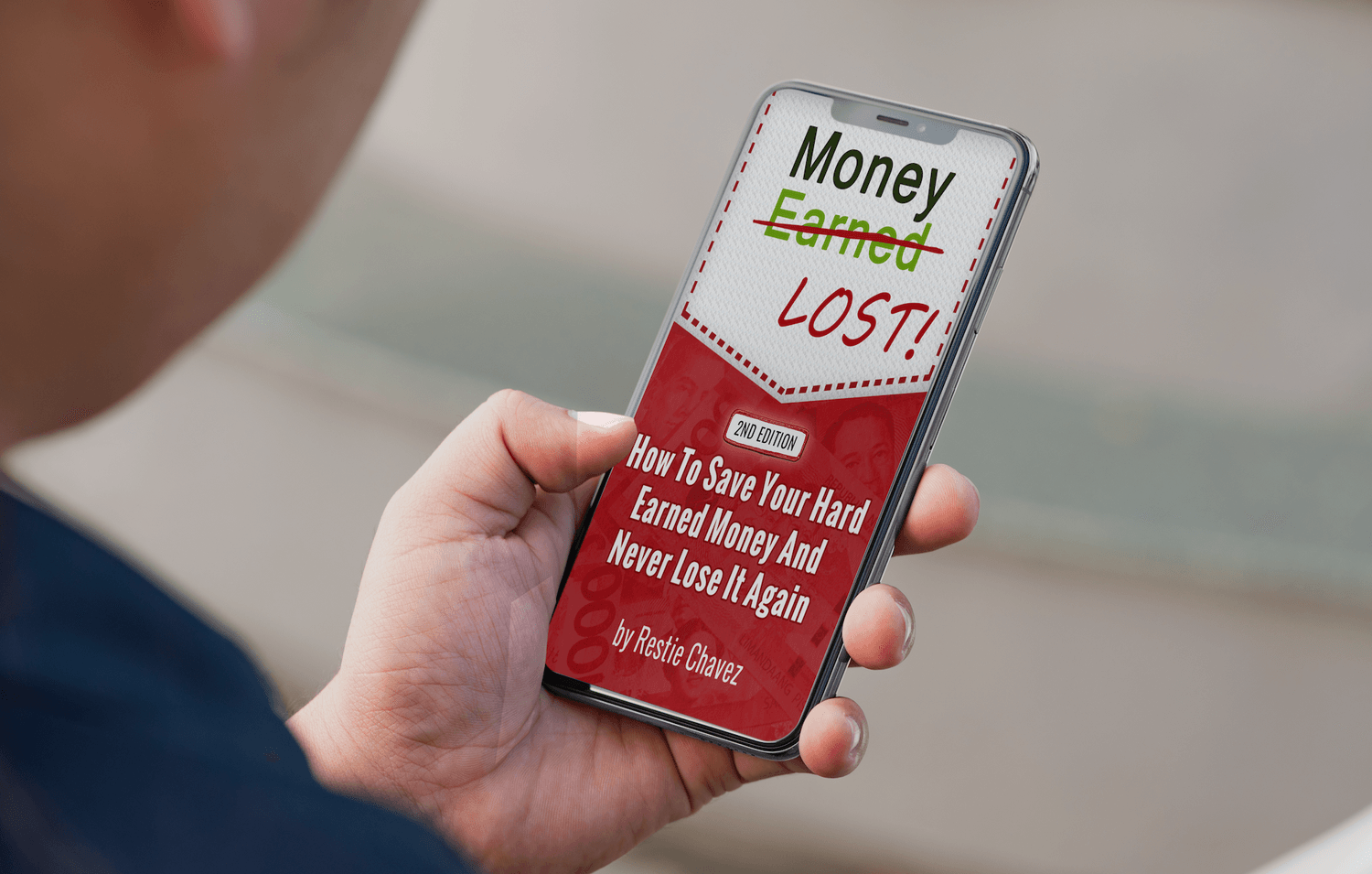
Money Was Never the Point.
Restie is a full-time father to his two boys, Ely and Lei, and a devoted husband to his wife, Zel.
Those roles changed how he sees money. He believes we were given a life to live, to love our families, help others, and enjoy it—not to spend our lives chasing something that was never meant to be chased.

Don't take Restie's word for everything.


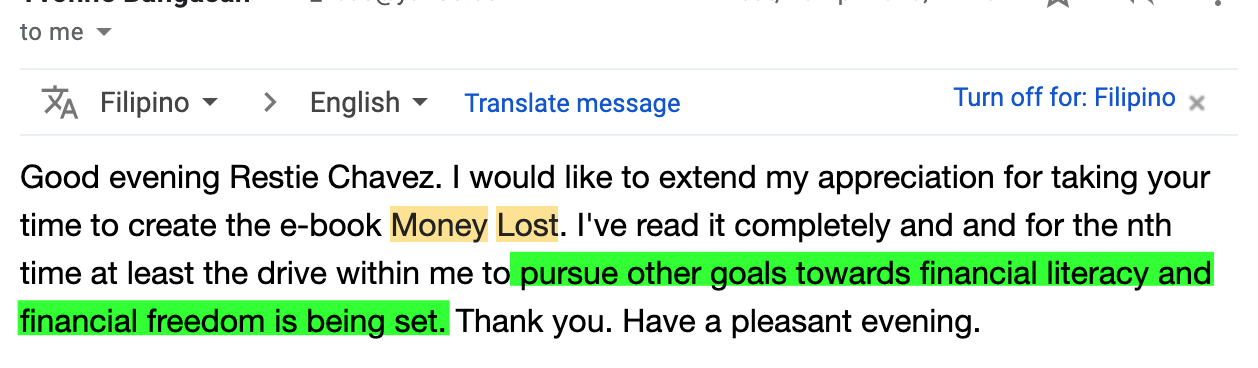
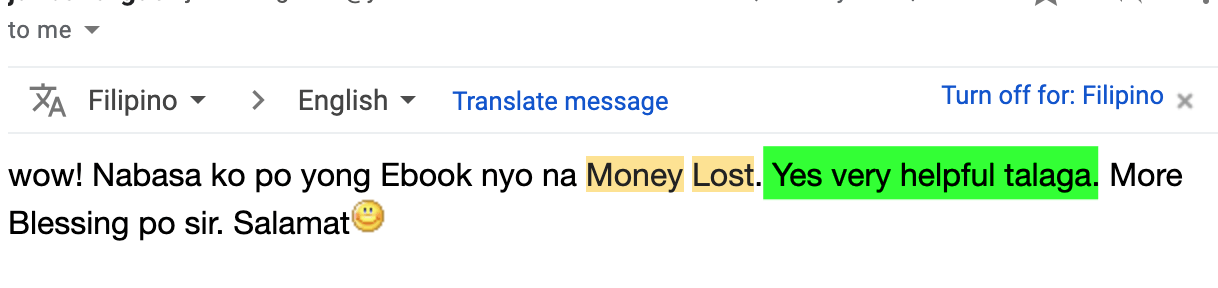
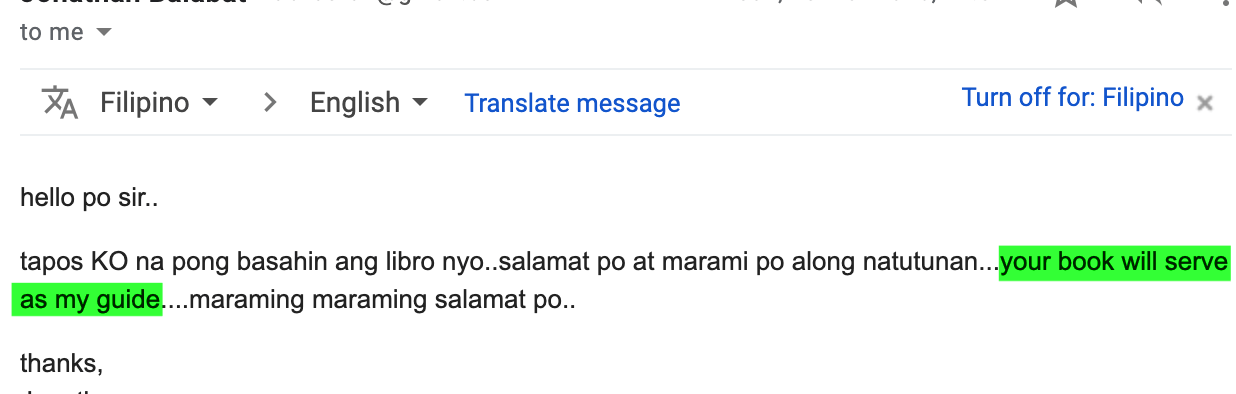
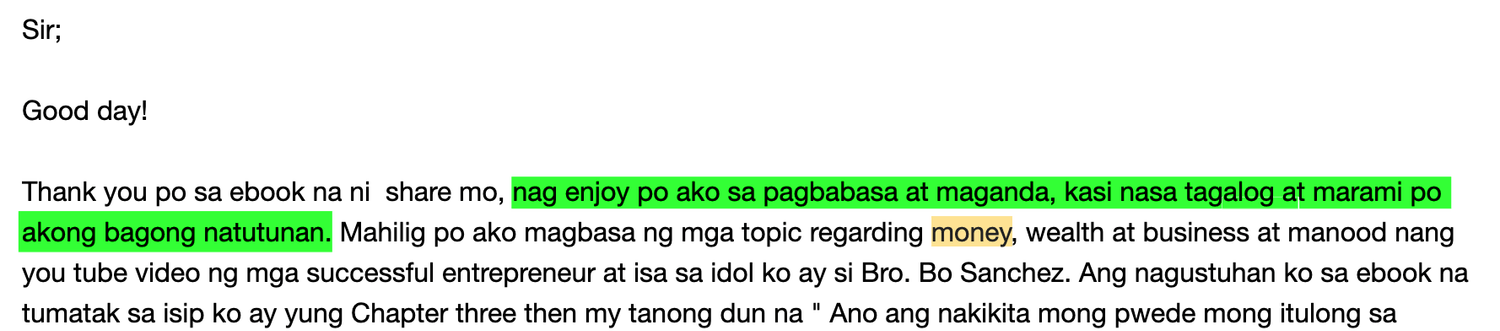
Look. You don't need to buy this. Just be cautious.
Don't spend your money on things that are worthless. You'll be fine.
Money Lost! was created for someone who's trying to understand what's happening with their money before another mistake becomes expensive.
For someone ready to understand.
Here's what Restie put together for you.
- A practical eBook about money, behavior, and decisions
- 10-step Financial Success progression
- Bonus: Investing + OOC-EMR decision framework
- Simple Filipino/Taglish approach
- Accessible on your phone, laptop, or iPad
Secure checkout • Simple buying process
Questions you might have.
Is this an investment book?
Hindi. Hindi siya investing book or guide. At mas lalong hindi ito expert advice. It's simply like sharing his journal ng mga discoveries, lessons, at attempts na ginawa n'ya gamit ang sarili niyang oras, pera, at effort. Kung investing advice ang hanap mo, this probably isn't the book for you.
Is this a get-rich-quick book?
No. The author needed to try every possible way bago n'ya ma-figure out how money really works. And “get-rich quick” is not one of them.
Do I need to be financially sophisticated to understand it?
No. The writing is intentionally conversational and practical, para madaling maintindihan. In fact, Filipino Taglish ang ginamit sa buong book.
Does the investing section guarantee returns?
No. Absolutely not. In fact, isa yan sa shinare ng author. Walang guaranty pero may possibilities at hindi mawawala ang risk. Pero dapat, manageable ang risk para in case mali ang decision— kaya pa rin magpatuloy sa buhay.
Money Hates Being Chased.
It follows people who are ready to handle it. The book is the start.
GET ACCESS NOW! →